





Care Guide
Proper Storage and Care for Inflatable Tents – How to Keep Yours in Top Shape
Inflatable tents are robust, practical, and remarkably easy to handle. However, for them to remain reliable for years to come, proper care and storage are essential.
Much of the damage occurs not during camping, but afterwards – through incorrect drying, cleaning, or packing. That is exactly why it pays to know a few simple ground rules. In this guide, we show you how to properly care for, store, and protect your inflatable tent for the long term.
Why proper storage is so important
An inflatable tent is made for outdoor use. It withstands rain, wind, and regular use – provided it is treated correctly afterwards. The most common mistake is not rough use outdoors, but packing away a wet, dirty, or overly tightly compressed tent after a trip.
Neglecting this can lead to mold, unpleasant odors, material stress, and long-term damage to the fabric, seams, or air chambers. The good news: with a few simple steps, you can avoid exactly that and significantly extend the lifespan of your tent.
Step 1: Always dry the tent completely
The most important point of all: your tent must be completely dry before storage. Even minimal residual moisture can be enough to cause mold, generate unpleasant odors, or permanently damage the material.
Especially after rain, damp ground, or cool nights, moisture often remains unnoticed in the fabric or in the folds. Therefore, it is not enough to just "let the tent dry briefly." It should be truly completely dry before it goes into the bag.
Practical tip
Set up your tent again after the trip at home or hang it in a well-ventilated place. This ensures that even hidden moisture disappears completely.
Step 2: Clean the tent before storage
Dirt is not just a visual problem. Sand, dust, and small particles act like fine sandpaper on the material during movement and storage. Packing away a dirty tent regularly puts unnecessary strain on the fabric and coating.
Therefore, you should remove coarse dirt before storing and clean the tent with clear water if necessary. Aggressive cleaning agents or a pressure washer, on the other hand, are not a good idea, as they can damage the material, coating, and seams.
Important for cleaning
- Remove sand and coarse dirt first
- Clean with clear water
- Avoid aggressive agents
- Do not use a pressure washer
Step 3: Deflate completely
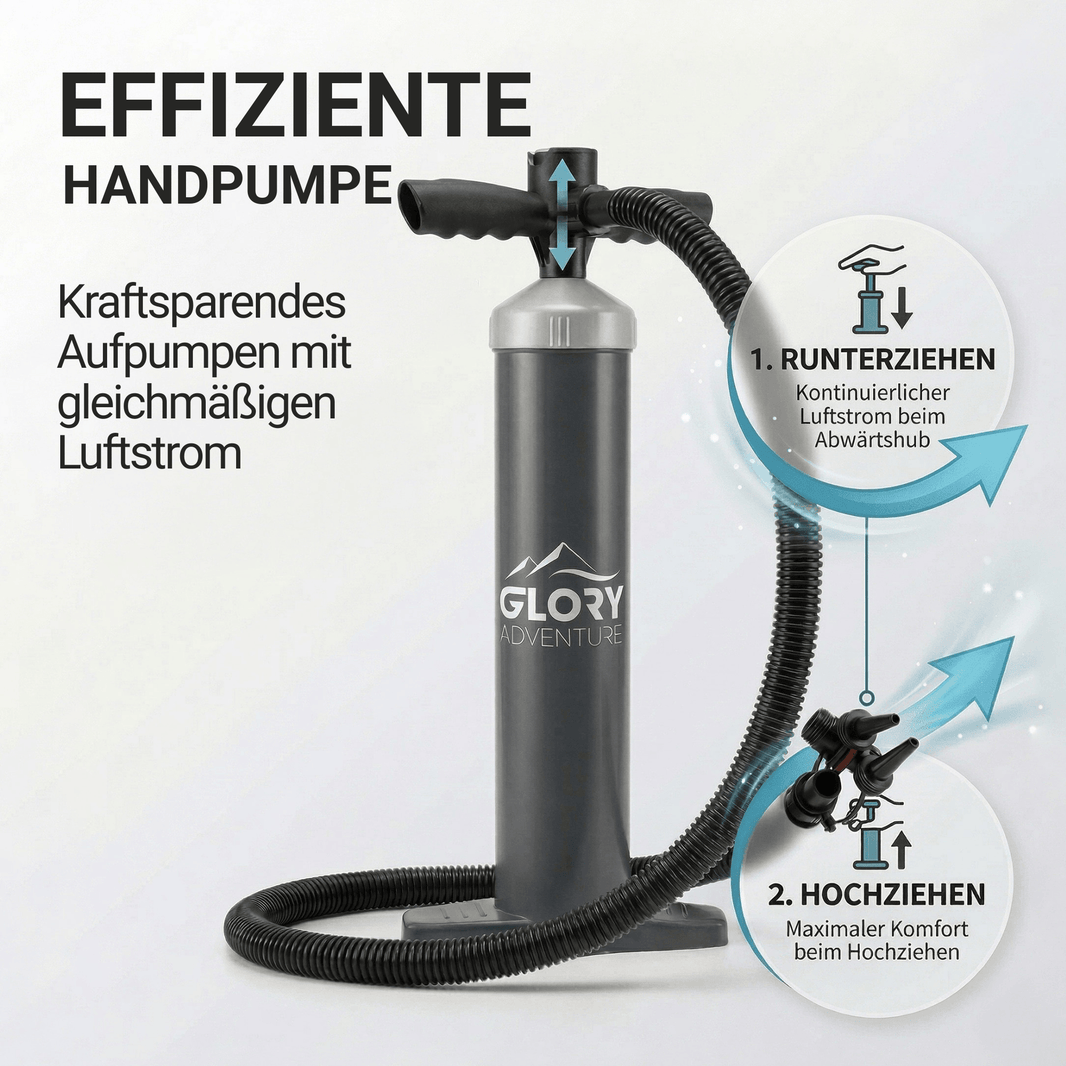
For inflatable tents, not only the fabric but also the air system plays a decisive role. Therefore, it is important to release the air completely before storage and ensure that valves remain clean and free of dirt.
If unnecessary pressure remains on the chambers, material stress occurs. This may not be immediately visible, but can impair the lifespan in the long run. Properly deflating the tent protects the structure and ensures that everything works reliably the next time you set it up.
Step 4: Folding the tent correctly
Many people make a typical mistake here: the tent is quickly stuffed into the bag after camping. In the short term, this might save time, but in the long term, it unnecessarily stresses the material, seams, and especially the air chambers.
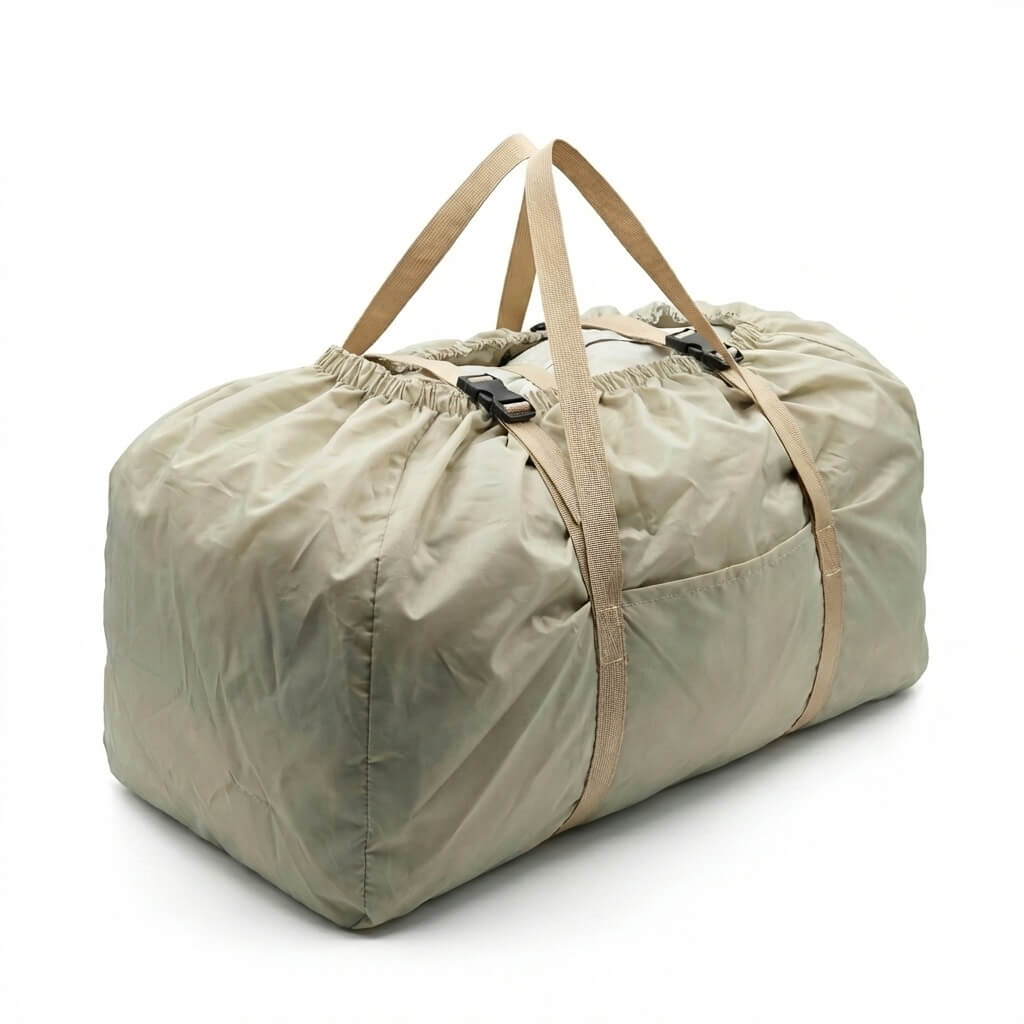
It is better to roll the tent loosely or fold it evenly. Sharp creases and strong pressure should be avoided as much as possible. Especially with inflatable tents, careful packing pays off because it spares the structure.
Better packing
- Roll loosely instead of stuffing
- Fold evenly
- Avoid sharp creases
Step 5: The right storage location
Not only how, but where you store it determines how well your tent is preserved over months or even years. The ideal storage location is dry, cool, dark, and well-ventilated. This minimizes stress on the material, coating, and air system.
Problematic, on the other hand, are damp basements, direct sunlight, or intense heat, such as in an attic in summer. Such conditions promote mold, odors, and material fatigue.
Ideal storage spot
- Dry
- Cool
- Dark
- Well-ventilated
Better to avoid
- Damp basements
- Direct sun
- Intense heat
Step 6: Regular checks
Even if the tent is not used for a long time, an occasional check is worth it. Especially during the off-season or over the winter, it makes sense to quickly check if everything is remaining dry, clean, and in good condition.
This allows you to identify problems early before they turn into major damage. Pay particular attention to odors, residual moisture, and the condition of the valves.
Care during the season
It is not just the storage at the end of a trip that is decisive. You can also do a lot during the season to ensure your inflatable tent stays in good condition for a long time. Small routines after each use make a surprisingly big difference.
After every use
- Let dry briefly
- Remove coarse dirt
- Do not pack away wet
For longer trips
- Ventilate regularly
- Reduce condensation
- Keep the tent clean
Typical mistakes in tent storage
Most damage to an inflatable tent is caused not by rain or wind, but by small acts of negligence after use. Packing a wet tent, storing it dirty, or keeping it in poor conditions for a long time often unnecessarily shortens its lifespan.
You should avoid these mistakes
- Packing away while wet or damp
- Packing away dirty
- Storing under pressure
- Keeping in damp or hot rooms
- Never checking valves and material
FAQ – Frequently Asked Questions about the care and storage of inflatable tents
How do I store an inflatable tent correctly?
Ideally dry, cool, dark, and well-ventilated. It is also important that the tent is completely dry and clean beforehand.
Can I pack an inflatable tent away damp?
Only for the short term in exceptional cases. Before long-term storage, the tent must definitely dry completely; otherwise, there is a risk of mold, odors, and material damage.
How do I clean an air tent properly?
Ideally with clear water and without aggressive cleaning agents. You should always remove coarse dirt and sand before storing.
Why should the air be released completely?
Because constant pressure on the air chambers can cause material stress. Full deflation protects the structure in the long term.
Conclusion
Good care means more adventure and less trouble
Proper storage and care determine how long your inflatable tent remains reliable. By drying it completely, keeping it clean, deflating it properly, and storing it under good conditions, you noticeably protect its material and function.
This keeps your tent ready for many more trips – from a spontaneous weekend adventure to a longer camping holiday.