




Tent Comparison
Inflatable tent vs. classic tent – what is actually better?
Anyone looking to buy a new tent often faces a fundamental question: an inflatable tent or a classic tent with poles?
Both options have their merits – but they do not suit the same requirements. While classic tents have been a staple of camping for years, more and more people are consciously choosing modern air tents because they are simpler, more comfortable, and significantly more relaxed to handle.
In this comparison, we will show you the most important differences, the real pros and cons, and who each type of tent is suitable for. This way, you can better judge in the end which tent really suits your camping style.
Why this decision is more important than many think
A tent is not just a place to sleep. It helps determine how your entire outdoor experience feels. If setting up is stressful, parts are missing, the tent has an impractical layout, or comfort is quickly lost in bad weather, this has a direct impact on your trip. That is exactly why it is worth deciding not just by price or aesthetics, but by what really matters in everyday life.
Many people still associate camping with complicated setups, bent poles, little space, and rather uncomfortable nights. This is precisely where inflatable tents and classic tents often differ very significantly. Because modern air tents follow a different principle: less effort, more comfort, and a faster start to your outdoor experience.
This question is crucial especially for beginners, festival-goers, road trip fans, or anyone who wants to set off spontaneously. Because the “better” tent is not necessarily the more technically complex model, but the one that fits your requirements.
What is an inflatable tent anyway?
An inflatable tent, often also called an air tent or air-beam tent, replaces classic poles with sturdy air tubes. Instead of assembling individual poles and inserting them into sleeves, the tent frame is filled with air using a pump. This creates a load-bearing structure that provides stability to the tent while significantly simplifying setup.
The basic principle is simple: inflate, peg out, done. Depending on the model, the air chambers are connected to each other or set up individually. High-quality inflatable tents, in particular, are designed to stand up quickly, remain stable, and offer significantly more relaxed handling compared to classic constructions.
The biggest difference, therefore, lies not just in the technology, but in the user experience. An air tent is particularly interesting for people who want to camp in an uncomplicated way without sacrificing comfort, feeling of space, and weather resistance.
What is a classic tent?
A classic tent uses poles made of fiberglass, aluminum, or a similar material to build the shape of the tent. The poles are connected, threaded through sleeves or clips, and then tensioned. This system has been established for decades and is available in many price ranges.
Classic tents come in countless varieties – from small trekking tents to larger family tents. Their advantage lies primarily in the fact that they are widely available, often cheaper to get started with, and very useful for certain purposes. Classic tents are often the obvious choice, especially in the ultra-light trekking sector.
At the same time, the setup is often more involved, especially when multiple poles, different lengths, or a complex floor plan are involved. For experienced campers, this is usually not a big problem. But for many beginners or occasional campers, this can quickly become an annoyance.
Inflatable tent vs. classic tent in direct comparison
1. Setup and speed
This is one of the biggest differences. A classic tent usually requires several individual steps: sorting poles, assembling, inserting, tensioning, aligning, and then pegging out neatly. That is not impossible – but it is more prone to error and often more time-consuming.
An inflatable tent is generally set up much faster. Instead of juggling multiple poles, the tent frame is simply inflated. That saves not just time, but above all, nerves. This is a real advantage, especially in bad weather, late arrivals, or if you just want to be finished quickly.
2. Comfort and feeling of space
Comfort is not just a question of the mattress, but also of tent design. Many inflatable tents are designed to offer a more spacious feeling. Models with full or near-full standing height, in particular, make a big difference in everyday use. Anyone who can change, organize themselves, or simply move more upright in the tent will find camping much more pleasant.
Classic tents also come in comfortable versions, but especially in smaller or cheaper segments, the feeling of space is often more restricted. Additionally, rigid poles determine the internal shape of the tent more strongly. Air-supported systems often feel more open and modern.
3. Stability and weather resistance
Many people ask themselves first if an inflatable tent is even stable enough. The honest answer: Yes – if it is a high-quality model. Modern air tents are designed for stability and can be very robust. The flexible structure even has a practical advantage, because it reacts to stress differently than rigid poles.
Classic tents can also be very stable, especially high-quality models with good aluminum poles. However, much depends on setup, material quality, and correct tensioning. With cheaper pole tents, the difference is often noticeable.
4. Pack size and transport
Depending on the category, classic tents often have a smaller pack size, especially in the trekking and minimalist range. Those who want to travel particularly light and count every centimeter in their backpack are usually better served with a classic trekking tent.
Inflatable tents are often designed for comfort camping, road trips, festivals, or weekend trips. They are not necessarily huge, but the focus is more on easy use and livability than on maximum weight savings. For car trips, campsites, or flexible micro-adventures, this is usually not a problem.
5. Price and long-term value
Classic tents are often cheaper in the entry-level range. Anyone looking for only a very simple tent or wanting to invest as little budget as possible will find an inexpensive model there more quickly. That makes classic tents look attractive at first glance.
Inflatable tents are often more expensive to purchase. This is due to the technology, the material, and the orientation towards higher comfort. However, this higher price can be worth it if the tent is used regularly and you value easy setup, more space, and a more relaxed camping experience.
For whom is which tent suitable?
An inflatable tent is ideal for you if …
… you want to experience camping as simply as possible. If you don't like classic tent poles, prefer to be ready to go faster, and are looking for a modern, comfortable setup, an inflatable tent is very likely the better choice.
An air tent is a particularly good fit for you if you are traveling by car, going on weekend trips, visiting festivals, traveling with a partner or friends, or consciously value comfort while camping.
A classic tent fits you better if …
… you are traveling very minimalist, are primarily concerned with weight, or are looking for a tent for trekking and longer tours on foot. In this area, classic constructions show their strength because they are often lighter and more compact in design.
Also, if you are familiar with classic poles, camp only rarely, or consciously want to stay in the lower price range, a classic tent can be a sensible solution.
The biggest advantages of inflatable tents
The success of modern air tents is no coincidence. They are not just a technical alternative, but solve concrete problems that many people associate with classic camping.
The first big advantage is the simple setup. Especially for occasional campers or people who want to arrive in a relaxed state, this is a real game changer. Instead of struggling with poles and setup instructions, the tent is standing much faster.
Added to this is the topic of comfort. Many inflatable tents are designed for more freedom of movement, better usability, and a more pleasant feeling of space. Anyone who wants to see camping not as a sacrifice, but as an experience, benefits from this particularly strongly.
Modern air tents therefore fit perfectly with a camping style that combines nature, freedom, and comfort. Not complicated, not overloaded, but well-thought-out.
Are there also disadvantages to inflatable tents?
Yes – and that is exactly what one should talk about honestly. The biggest disadvantage is usually the higher entry price. Anyone looking only at the purchase price often finds classic tents cheaper. For some, this is a strong argument, especially if the tent is used only rarely.
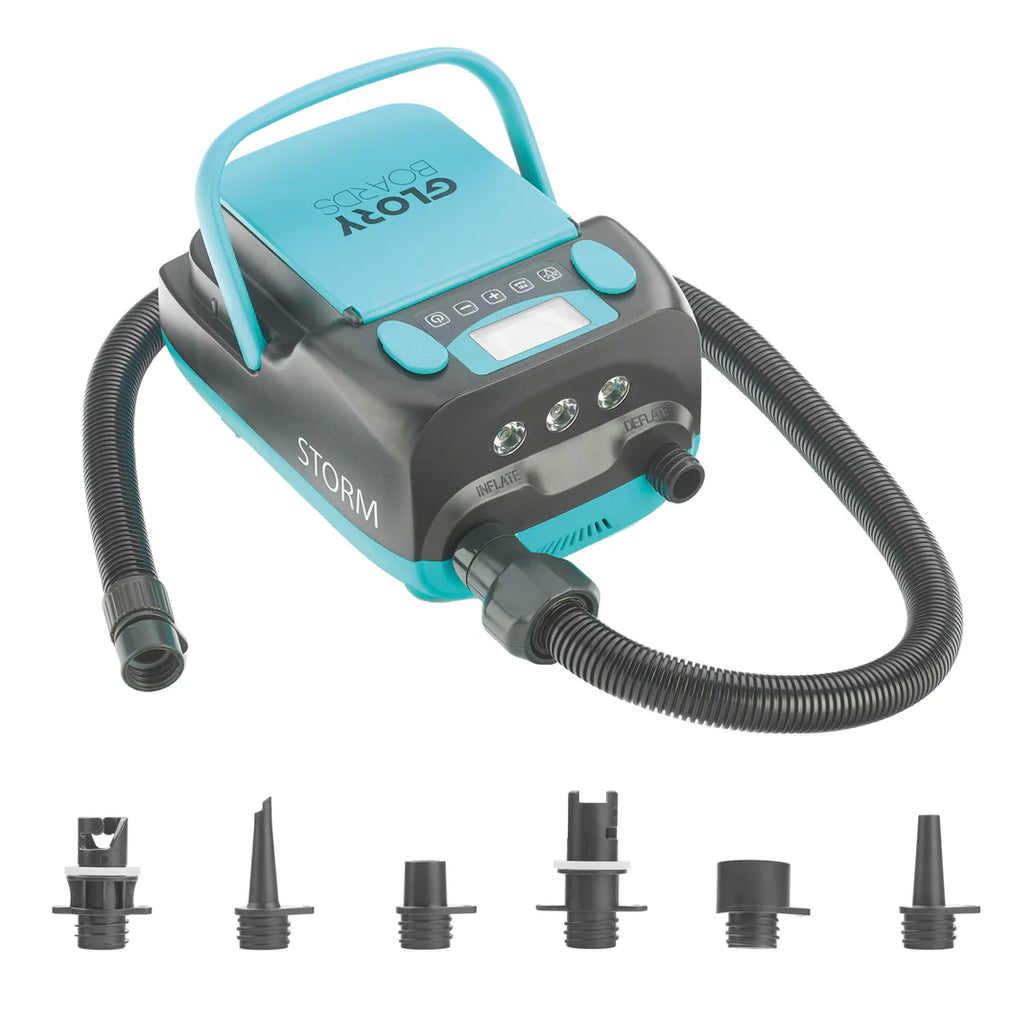
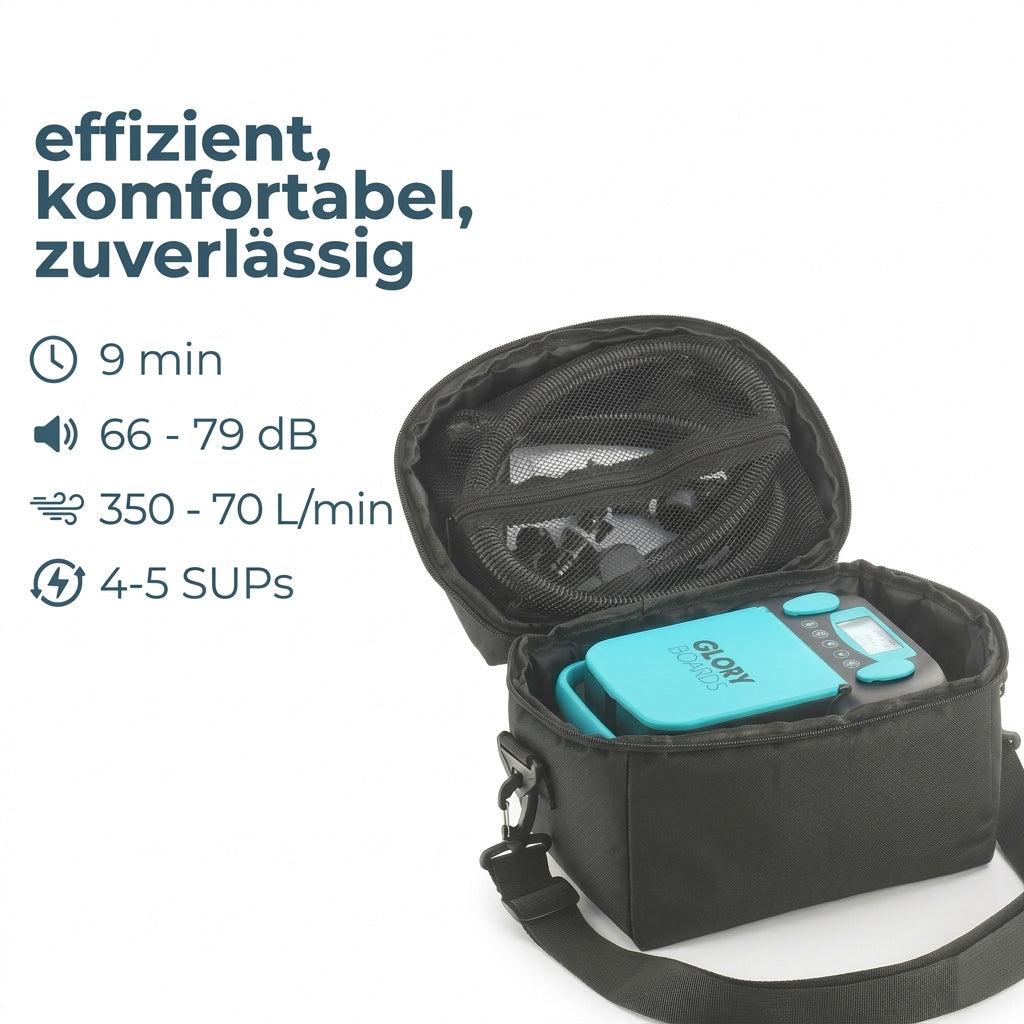
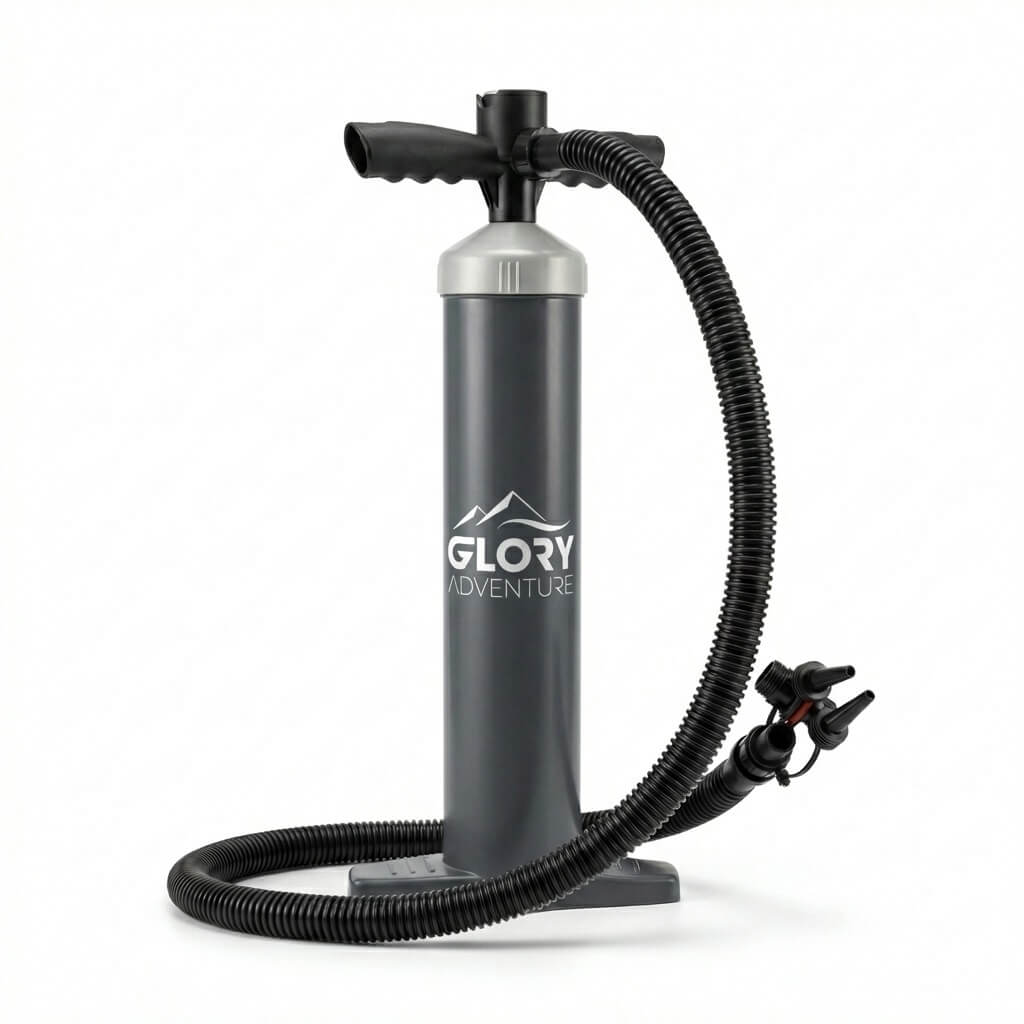
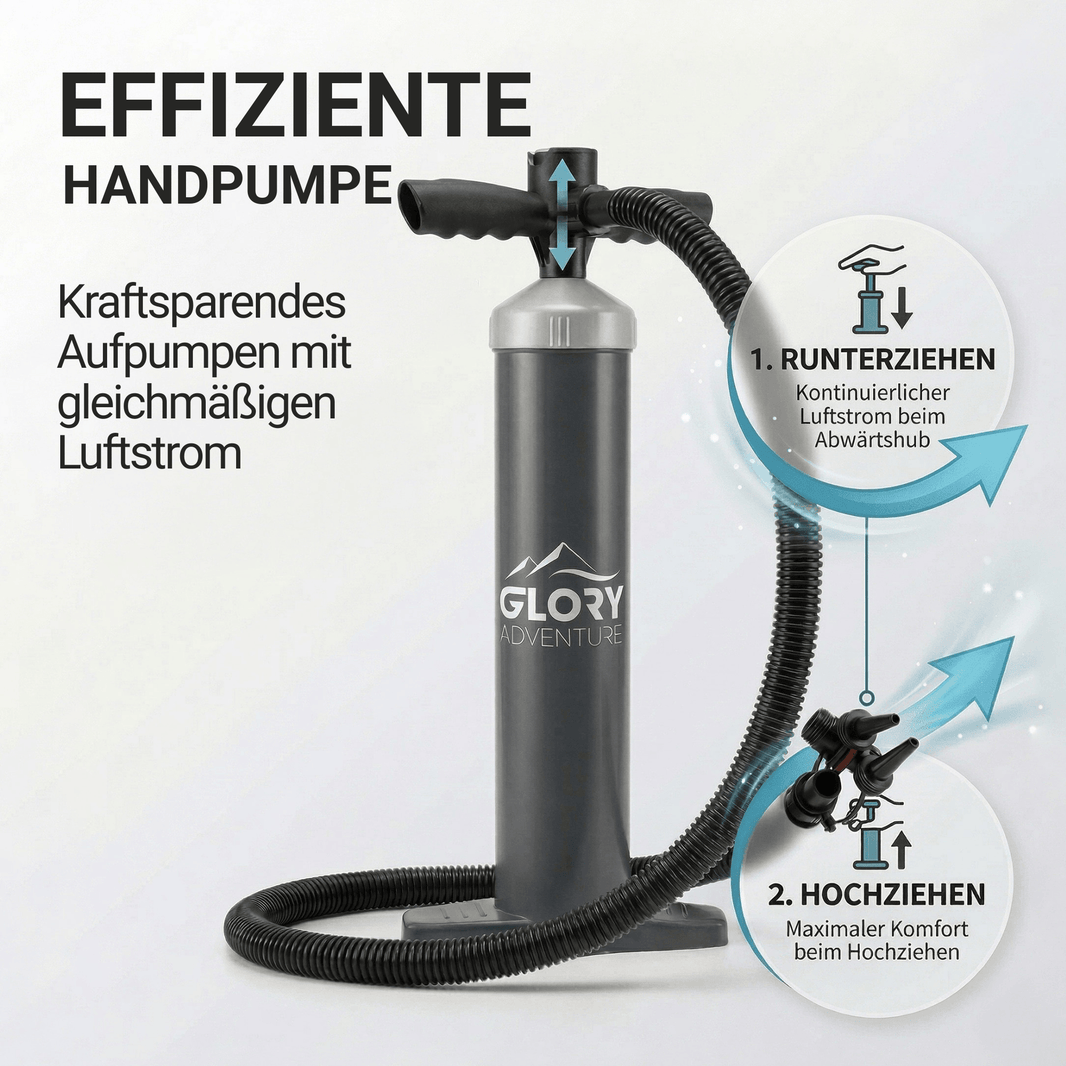
Furthermore, an inflatable tent needs a pump. That is not a big problem, but it is an additional component of the system. Those who want to travel ultra-light and minimally will therefore often continue to end up with classic solutions in the trekking segment.
Nevertheless, one should properly categorize these disadvantages. For most camping, festival, and road trip scenarios, the advantages of an air tent clearly outweigh the others when comfort, quick setup, and easy handling are important.
Conclusion: Inflatable tent or classic tent – which is the better choice?
The better choice doesn't depend on which system is older or more well-known, but on how you want to camp. A classic tent makes sense if you are traveling minimally, want to save weight, or are looking for a simple budget model.
An inflatable tent is in most cases the better choice if you want to camp with ease, want faster setup, and are looking for more comfort. It offers clear advantages especially for beginners, festivals, road trips, weekend trips, and comfort-oriented camping.
If you want to enjoy outdoor experiences without having to work your way through a complicated setup first, an air tent is the more modern and often more pleasant solution.
Discover suitable products
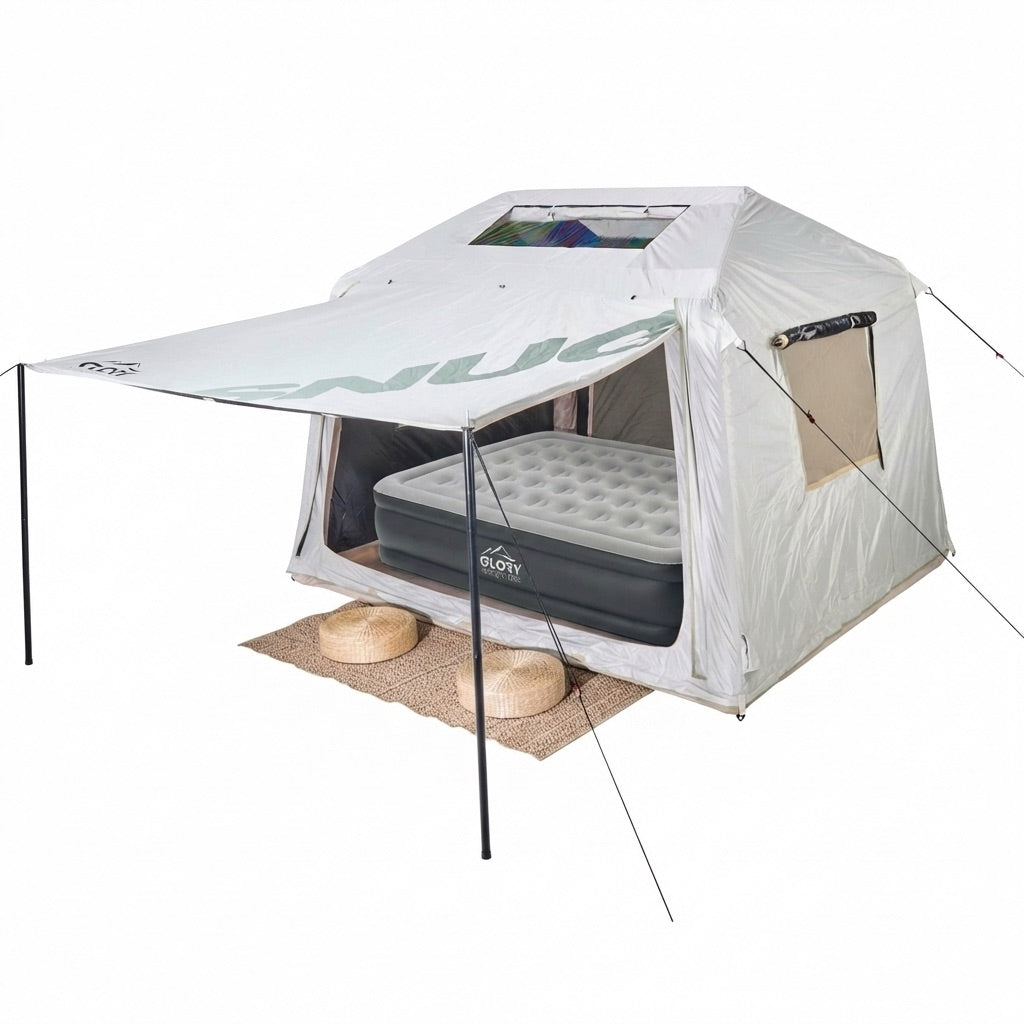
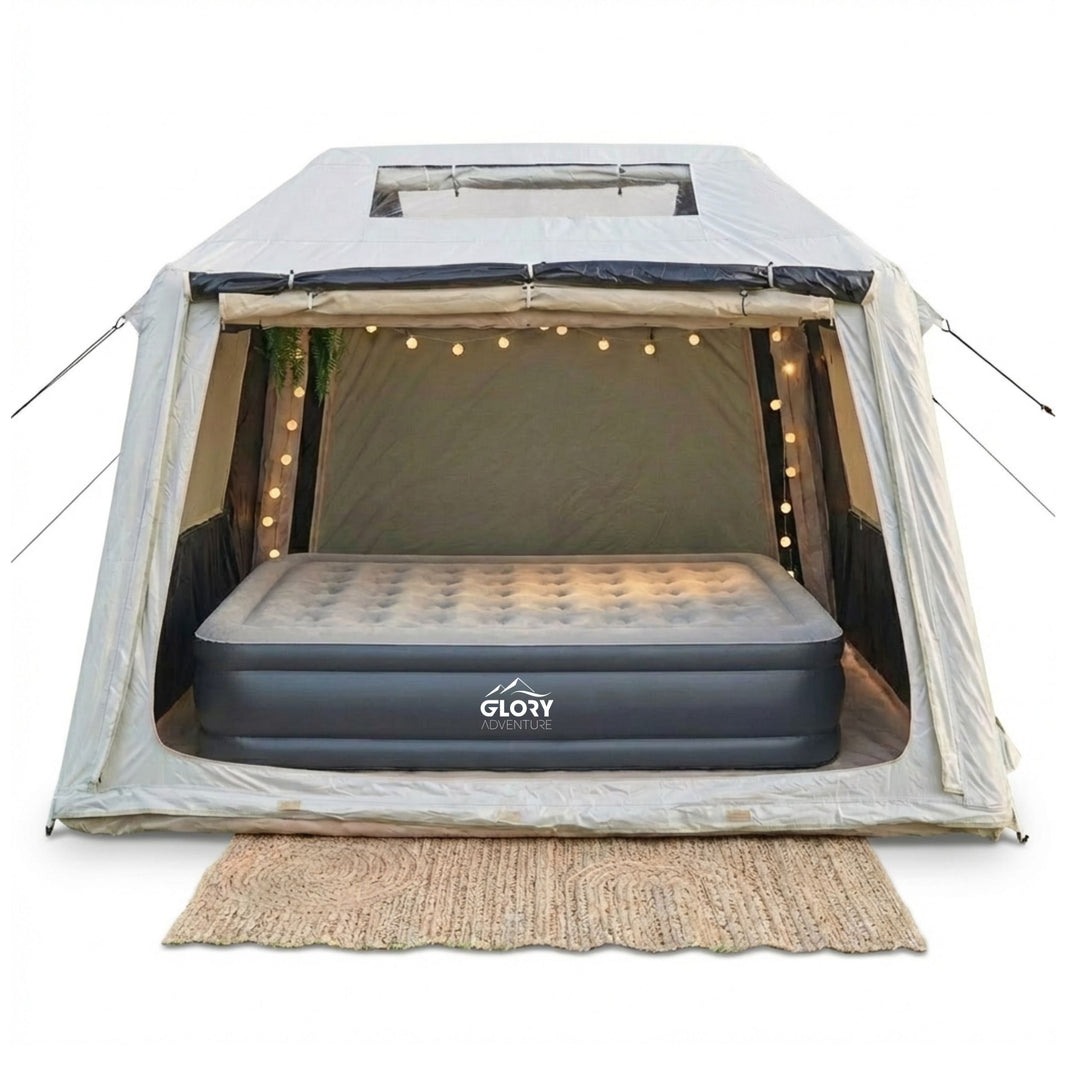
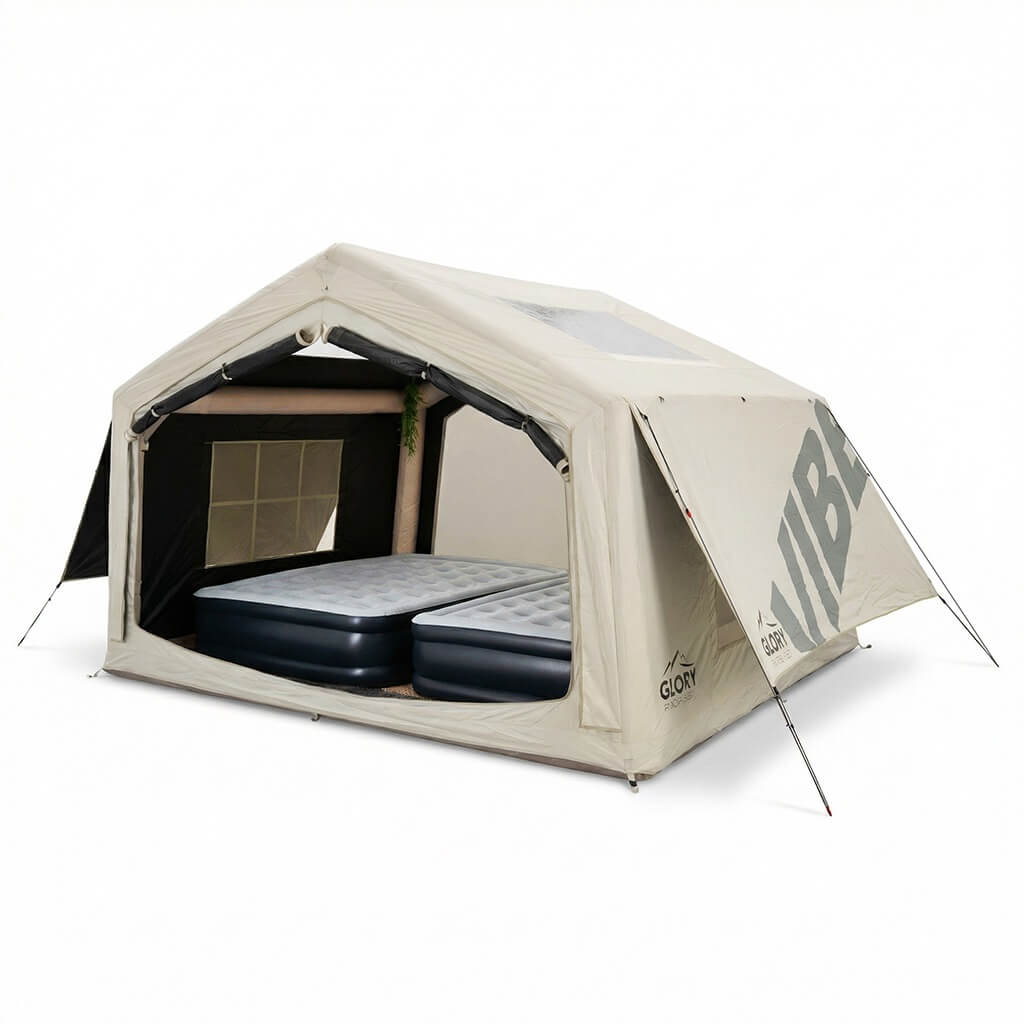
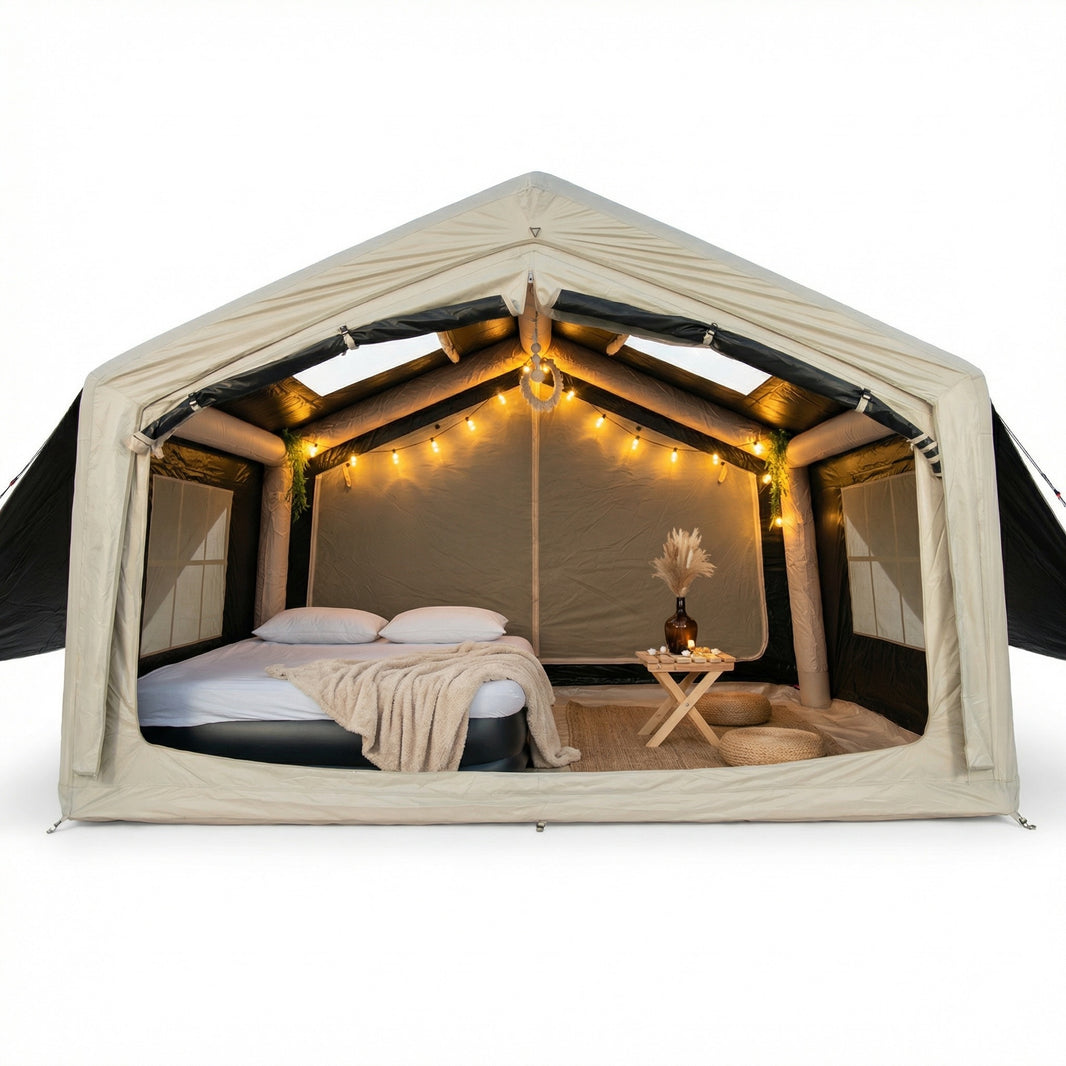
If you are looking for a tent that combines modern outdoor experiences with comfort, it is worth taking a look at our category for inflatable tents. There you will find models for different purposes – from a compact setup for two people to a spacious solution for groups and festivals.
Compact adventures
SNUG for more compact setups and easy trips.
Versatile all-rounder
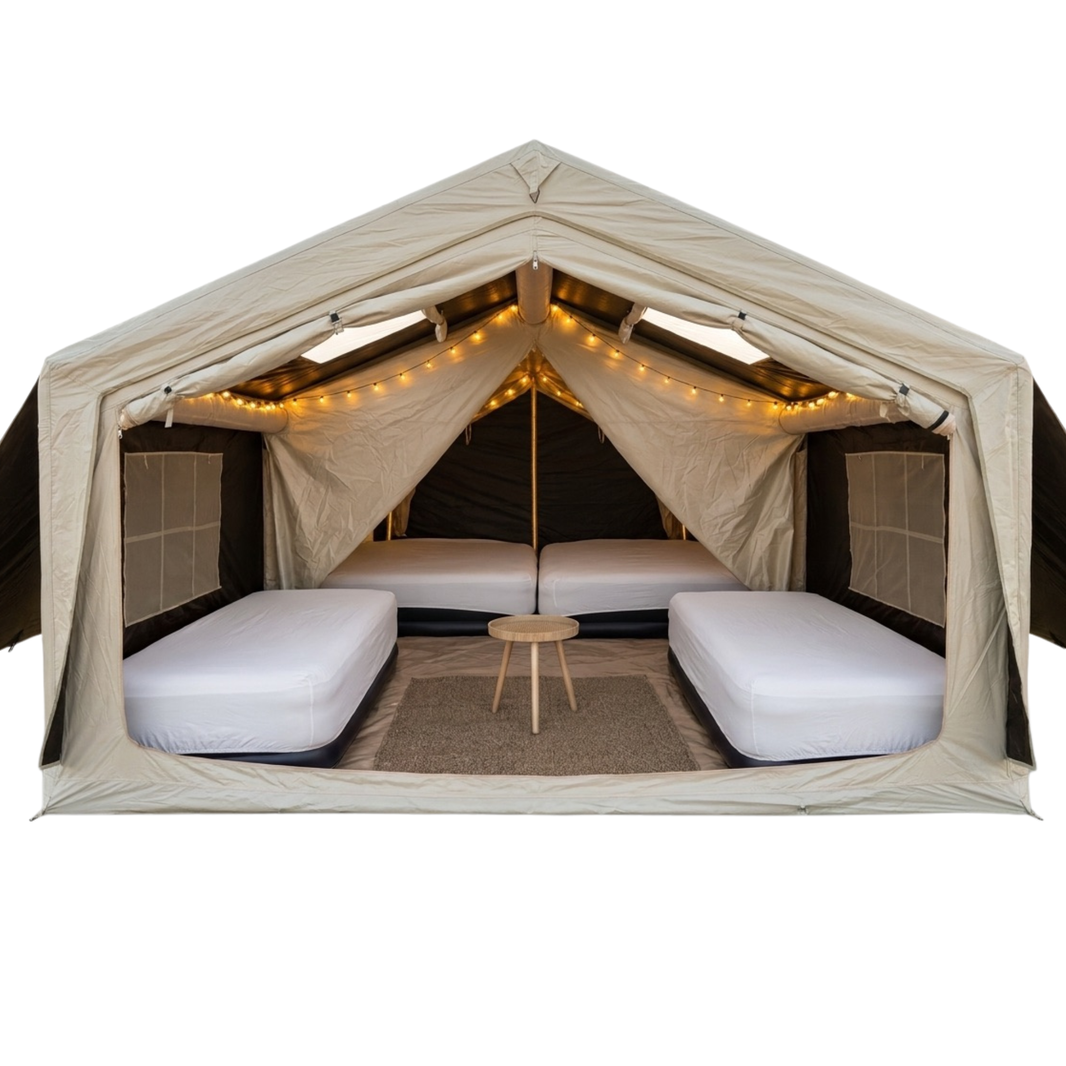
VIBE as a comfortable solution for festivals, road trips, and more space.
More space for groups
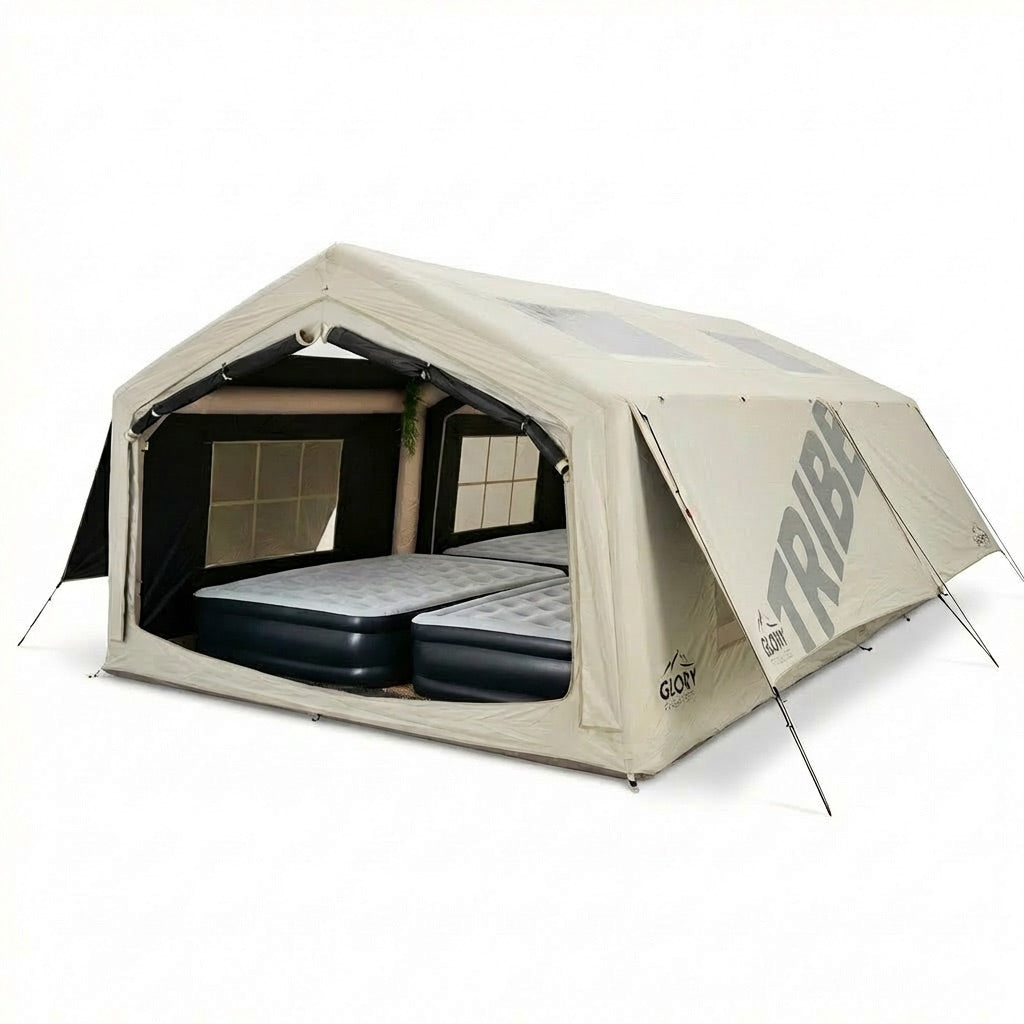
TRIBE for groups, families, and longer stays.
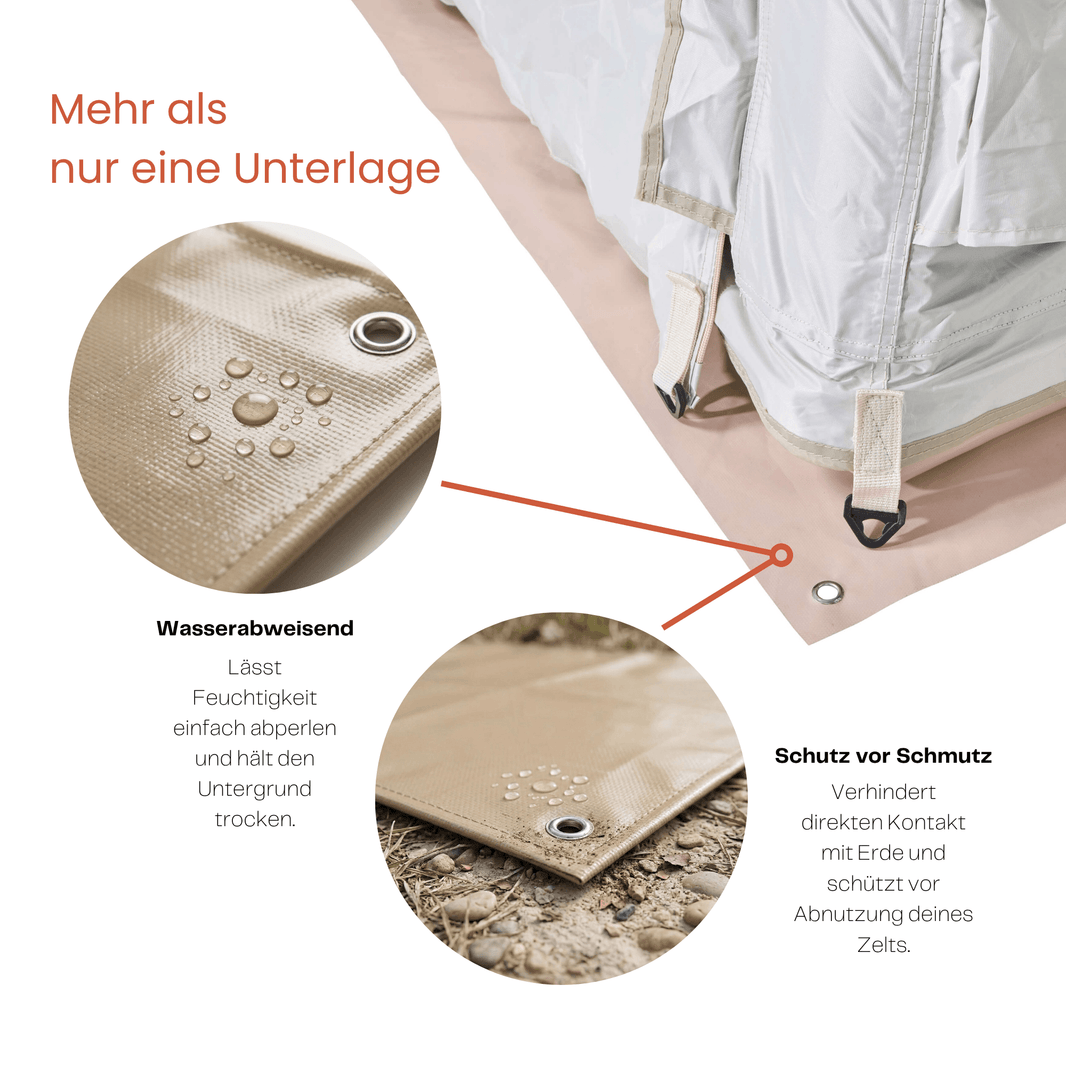
In addition, you will find practical additions for your setup in the accessories section.
FAQ – Frequently asked questions about inflatable and classic tents
Is an inflatable tent stable enough?
Yes, high-quality inflatable tents are very stable and designed for outdoor use. The deciding factor is not just the system, but above all the quality of the material, workmanship, and construction.
How long does it take to set up an inflatable tent?
That depends on the model, but generally, setup is significantly faster than with a classic tent. That is precisely one of the biggest advantages of air tents.
Can an inflatable tent burst?
With high-quality models, this is not a realistic scenario under normal use. Modern systems are designed for safe use and are often equipped with technical protective mechanisms.
Are classic tents cheaper?
In the entry-level segment, usually yes. In return, inflatable tents often offer more comfort, easier setup, and an overall more relaxed user experience.
Which tent is better for festivals?
For many festival-goers, an inflatable tent is the more practical choice, because it is set up faster, usually feels more comfortable, and makes getting started much easier.
Which tent is more suitable for beginners?
For many beginners, an inflatable tent is the more pleasant solution, because the setup is simpler and less prone to errors. This lowers the barrier to entry and makes camping overall more relaxed.
Discover more
Find the right tent for your camping style
Discover inflatable tents for compact adventures, comfortable road trips, and spacious setups for groups.